


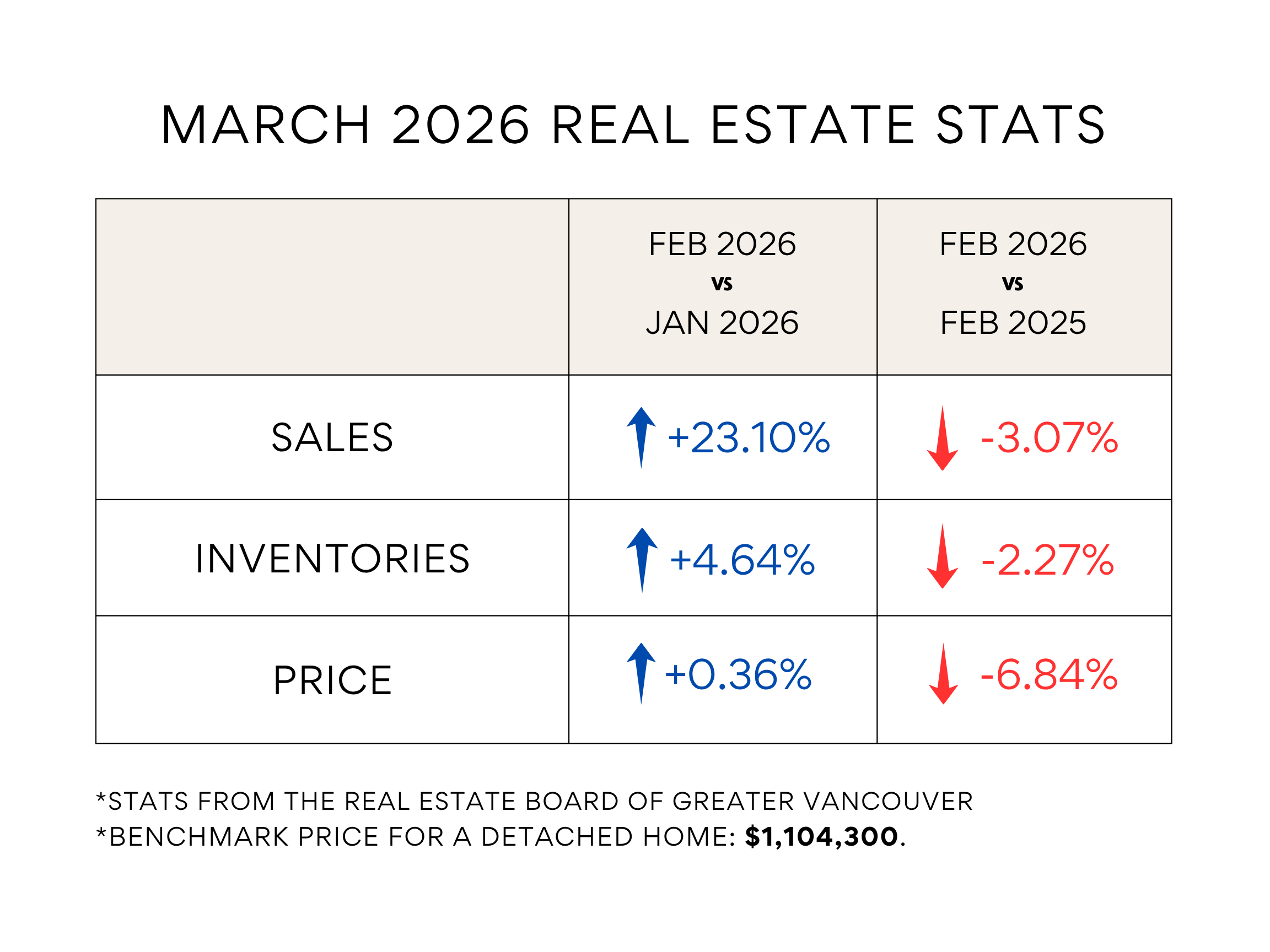
April Market Stats | Real Estate Light Chat: Do New Housing Policies Make Every Detached Lot More Valuable?
One topic that has been coming up frequently lately is BC’s new housing legislation and what it may mean for detached homeowners. You may have heard terms like Bill 44, Bill 25, and TOA, so here is a quick breakdown:
Bill 44
- Requires many municipalities to allow more density on lots traditionally zoned for single-family homes
- Some detached lots may now allow 3–6 units, depending on location and lot characteristics
- Intended to help increase housing supply through gentle density
Bill 25
- Prevents municipalities from using excessive restrictions to indirectly block development
- Limits tactics such as overly restrictive parking requirements, setbacks, and approval barriers
- Helps ensure municipalities follow provincial housing targets
Transit-Oriented Areas (TOA)
TOA encourages higher density housing near major transit hubs.
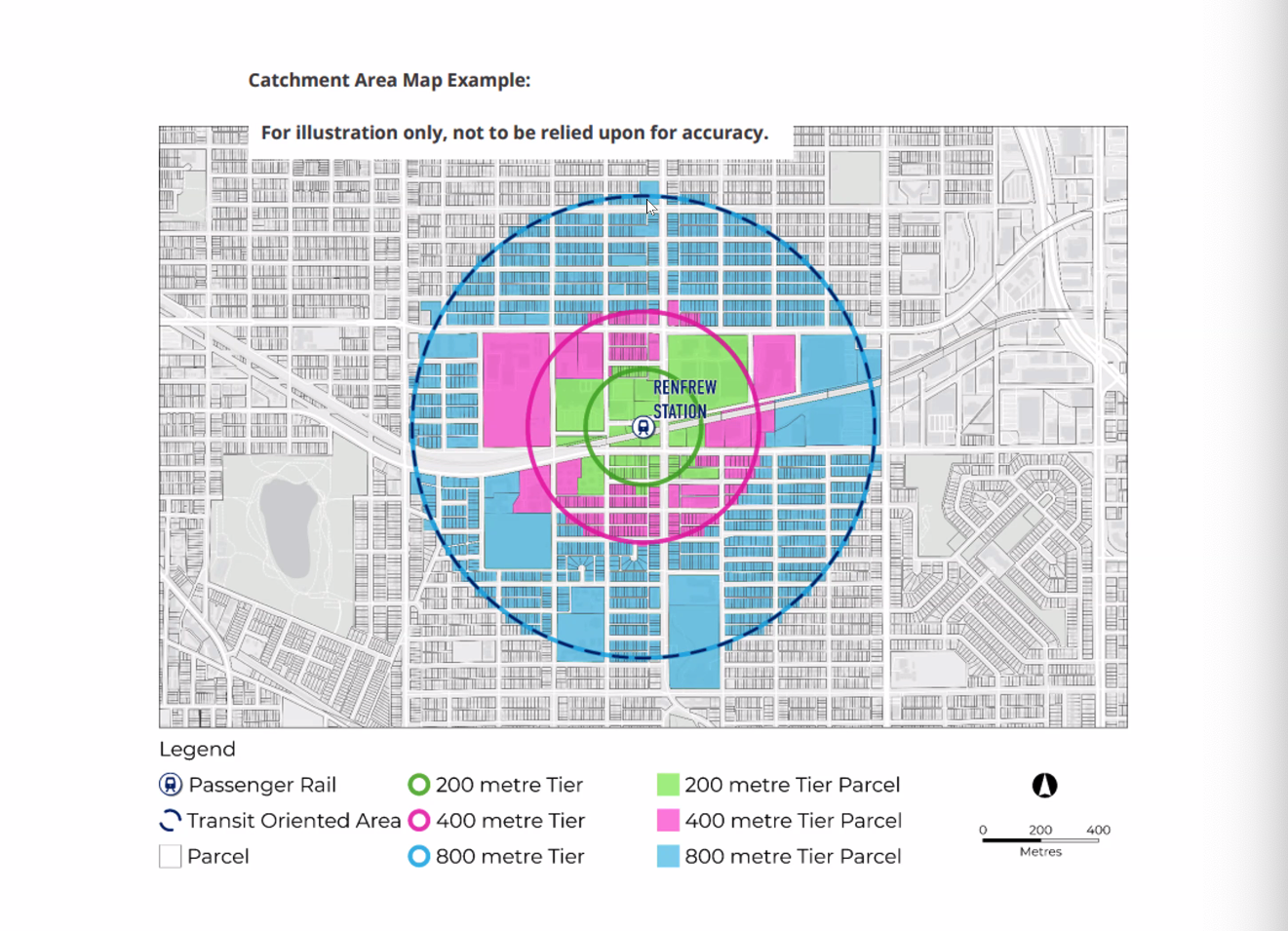
Using Renfrew Station as an example, TOA areas are generally divided into distance tiers:
- 0–200m: Highest density potential
- 200–400m: Moderate to high density potential
- 400–800m: Increased density potential compared to standard zoning
Naturally, many homeowners have started asking:
“Does this mean every detached lot is suddenly worth more?”
The short answer is: not necessarily.
While zoning and policy may allow for greater density, a property still needs to work from a practical building standpoint. Great zoning alone does not always mean a project is feasible.
Some common site constraints include:
- Water / sewer servicing limitations
- Electrical infrastructure limitations
- Lot size and frontage
- Irregular lot shape
- Slope / topography challenges
- Setback and building envelope limitations
- Easements / environmental restrictions
In other words, a property may have excellent zoning on paper, but once site constraints are factored in, the development potential may be far less than expected.
That said, these changes are not only relevant to builders and developers. We are also seeing more homeowners explore these options for:
- Creating mortgage helpers
- Multi-generational living
- Aging in place
Overall, government policy is clearly moving toward more flexible and higher-density housing, and many builders are already adapting their strategies accordingly.
My view is that these changes do not instantly transform every detached property, but they do add another layer to how land may be evaluated moving forward, especially for properties with favourable location and site conditions.
For those curious what modern multi-generational housing can look like, here is an interesting example: